Infinite Menus, Copyright 2006, OpenCube Inc. All Rights Reserved.


First Foods For Baby

Yummy & Nutritious Baby First Foods and Homemade Baby Food Recipes

advertisement 


These recipes for Homemade Baby's First Foods are great first foods to introduce to your baby between the ages of (4) and 6 months old. Many parents still begin to introduce solid foods (complimentary or weaning foods) to their babies prior to the age of 6 months olds. These recipes acknowledge and accommodate this fact. Ideally, babies should have nothing but breast milk and/or formula during the first 6 months of life.


Read more about baby being ready for solids and view our list of resources that advocate delaying solid foods.


suitable for babies 4 months +

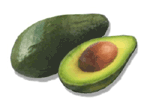
Avocado - a great first food for baby, avocados burst with essential fats and nutrients that a growing baby needs. Smooth and creamy, avocados are easily digested and well tolerated

Vitamins:  A, C, Niacin, Folate 
Minerals: Potassium, Phosphorus, Iron, Magnesium, Calcium

1. Peel and take out the pit of a ripe avocado - do not cook
2. Cut “meat” out and mash with a fork
3. There should be no need to use a machine as just like bananas, avocados have a very soft consistency and texture. Avocados do not need to be cooked
4. Add formula/breast milk or water to thin or add cereal (if desired) to thicken up. Learn More about Avocado


line


Bananas - bananas are another great first food for your baby. Research indicates that bananas and their mucosal properties actually help coat the tummy and help aid in digestion. Bananas are sweet, which may help baby more readily accept the first food experience. Learn more about bananas and if it's true that sweet fruits and veggies should not be introduced first.

Vitamins:  A, C, Folate 
Minerals: Potassium, Phosphorus, Selenium, Magnesium, Calcium

1. Peel ripe bananas - do not cook
2. Place banana in a food processor/food mill or blender and puree
3. You can also mash the banana in a bowl using a regular fork – heat in microwave for 25 seconds prior to mashing for extra softness
4. Add formula/breast milk or water to thin or add cereal (if desired) to thicken up.


line


Organic Brown Rice Cereal - Did you know that baby's first food does not have to be a commercial infant rice cereal? Many pediatric resources are acknowledging the fact that avocado, banana and sweet potato make great first foods for baby.

If you decide to make homemade baby cereal, make it with brown rice (organic if preferred). Whole grains are more healthy and nutritious for your baby (and for the whole family). Learn more about whole grains. You may also be interested in reading our Cereal FAQ explaining what types of grains to use, how long they may be stored and more.


1/4 c. rice powder (organic brown rice ground in blender or food processor)
1 cup water

1. Bring liquid to boil in saucepan. Add the rice powder while stirring constantly.
3. Simmer for 10 minutes, whisking constantly, mix in formula or breast milk and fruits if desired
Serve warm.


line


Pears
Vitamins: A, C, Folate 
Minerals: Potassium, Phosphorus, Magnesium, Calcium
 
1. Peel and cut into chunks so as to avoid the little seed portion.
2. Steam gently until tender;
3. Place in a blender/food processor and puree until smooth. You may be able to just use a fork too. 
4. Use the leftover cooking water if needed but Pears tend to be very runny and watery without adding liquid - Add some baby cereal to thicken if needed.


line

Squash
(winter)(4)6 months+
(nutrient info for squash of all types may be found at our "Tips on Squash" page)

1. Cut acorn, hubbard, or butternut squash in half, scoop out seeds
2. Place an inch of water in a baking pan, then place squash halves "face" down in the pan. Check on water level while baking
3. Bake in a 400 degree oven for 40 minutes or until the “shell/skin” puckers and halves feel soft then scoop squash “meat” out of the shell
4. Place squash "meat" into your choice of appliance for pureeing and begin pureeing.
5. Add water as necessary to achieve a smooth, thin consistency.
6. You can also peel the squash, scoop out the seeds and then cut into chunks and boil/steam until tender (like when boiling potatoes for mashed potatoes) then follow steps 4 and 5


line

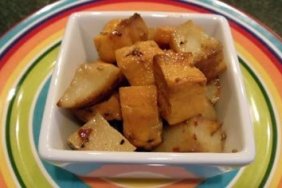
Yams/Sweet Potato
Learn why a Yam really is NOT a Yam.
Vitamins: A (24,877 mg ), C, Folate
Minerals: Potassium, Sodium, Selenium, Phosphorous, Magnesium, Calcium

1. Wash and poke holes in sweet potato with fork then wrap sweet potatoes in tin foil - do not peel for baking/microwaving. (you can also do this in the microwave - only use plastic wrap and cook for 8 minutes on high or until tender)
2. Place in a 400 degree oven and bake for 30 minutes or until soft
3. OR
4. Peel sweet potatoes and cut into small chunks
5. Place chunks into a pan with just enough water to slightly cover potato
6. "Steam" boil until tender, be sure to check on the water level.
7. Reserve any left over water to use for thinning out the sweet potatoes
8. If you have baked your sweet potato, remove skins and use liquid from your preferred source
9. Place sweet potato into your choice of appliance for pureeing and begin pureeing.
10. Add the reserved water or other liquid as necessary to achieve a smooth, thin consistency minutes or until a knife inserted near center comes out clean.


line


More First Foods & Homemade Baby Food Recipes suitable for babies 6 months +


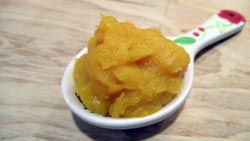
Mango (6-8 months - sometimes over 8 months)
Vitamins:  A (1262 IU in one cup.), C, E, K, Folate 
Minerals:  Potassium, Phosphorus, Magnesium, Calcium, Sodium

1 Ripe Mango
Peel, Deseed and mash Mango until smooth

Add
formula/breast milk or water to thin or add cereal (if desired) to thicken up.

Apples (Applesauce)
Vitamins: A, C, Folate
Minerals: Potassium, Magnesium, Calcium

This recipe is written so that you may use any amount of apples you wish.  
1. Peel, core and cut apple into slices/chunks
2. Place slices or chunks into a pan with just enough water to slightly cover apples
3. Boil/steam until tender; be sure to check on the water level and stir. 4. Apples may be mashed with a potato masher to achieve a smooth applesauce consistency. If your masher will not achieve a puree type of consistency, then follow steps 5 – 7
5. Reserve any left over water to use for thinning out the apples
6. Place into your choice of appliance for pureeing and begin pureeing.
7. Add the reserved water as necessary to achieve a smooth, thin puree
8. Add cereal (if desired) to thicken up the
9. Ask your pediatrician about adding some cinnamon for new tastes.
 
HINT.  You may also buy an "Adult" jar of Natural applesauce from your local grocers.  Make sure you buy Natural Applesauce however. Read the labels if you are unsure.  The only ingredients should be apples and water or just apples.  A few companies may add ascorbic acid (vitamin C) or citric acid to their Natural Applesauce; this is fine.

 
Why do you suggest peeling fruits and veggies; Nutrients are found in the peels right?


  Salt and sugar are never needed when making baby food. Omit these items, preferably at ALL times, in your baby's meals. Other spices such as cinnamon, garlic powder, pepper etc. may be introduced as early as 7 months with your pediatricians consult.


Green Your Baby's Tushie
advertisement


Wholesome Homemade Baby Food News & Updates


Recipes for Homemade Teething Biscuits


Welcome to the First Foods for Baby page.


First Foods for Baby do not have to be boring and bland rice cereals. Did you know that baby's first food should simply be a single ingredient, age appropriate first food? First Foods for Baby, as many pediatric resources are now acknowledging, may be avocado, banana and sweet potato. These healthy and nutritious foods make really great first foods for baby.

cool
advertisement


ISA Booties, soft sturdy chic and stylish natural cloth baby shoes
advertisement

wholesomebabyfood recipes links of interest

MORE HOMEMADE BABY FOOD RECIPES & RECIPE TOPICS

View these pages for more tips & topics on baby feeding & cooking baby foods.


Our 4th Edition Baby Food Recipes eBook is available!The 4th Edition of our Wholesome Baby Food Recipes eBook released in October 2007, is available.

Enter our Baby Food Contest!


icon
advertisement
 
Highlights High Five™

a new magazine for preschoolers.


links More Baby Solid Food and Baby Food Recipe Topics:


Solid Food Stages & Feeding First Solids Month Range of Feeding Stages & Tips for Feeding First Solid Foods


Introducing Solid Foods by Age Chart for information about what food to avoid and what foods are appropriate for certain ages.  


How Much Food Should Your Baby Eat? Not as much as you may be thinking. Read our article and ease your mind.


blog
Visit our blog.


© Copyright 2003-2009 wholesomebabyfood.com. All Rights Reserved. Information in this website is not meant to be taken as medical advice, we are not licensed medical physicians, and thus the information presented should not replace the medical advice of your doctor or pediatrician. Contents of this website may be reproduced only for personal use. Contents may not be reproduced for other use without the express written consent of wholesomebabyfood.com. Privacy Policy & Notices